




















































Leica’s 6-bit coding is a marking present on M lenses that enables digital cameras to automatically recognize the lens fitted. Once identified, the camera applies appropriate corrections, notably for vignetting and color drift, and records the lens model in the EXIF data.
Leica M lenses are renowned for their optical quality and longevity, including older models designed for film. Thanks to 6-bit coding, these lenses can be upgraded for digital use.
By adding a specific marking on the bayonet ring, the old lens is fully recognized by the digital camera, just like a recent model. The camera can then automatically identify the lens and apply the appropriate corrections.
Table of contents
What is 6-bit coding at Leica?
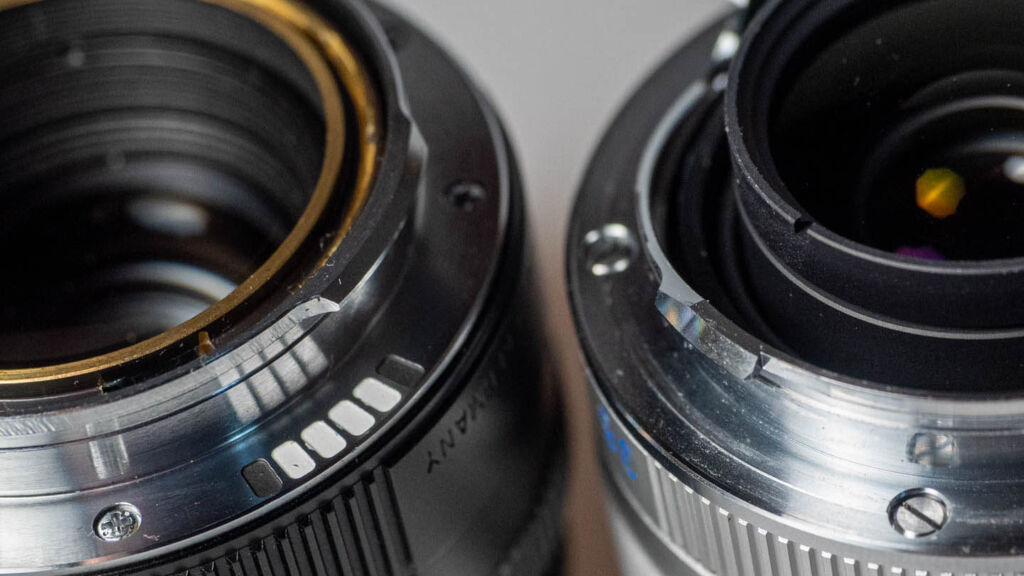
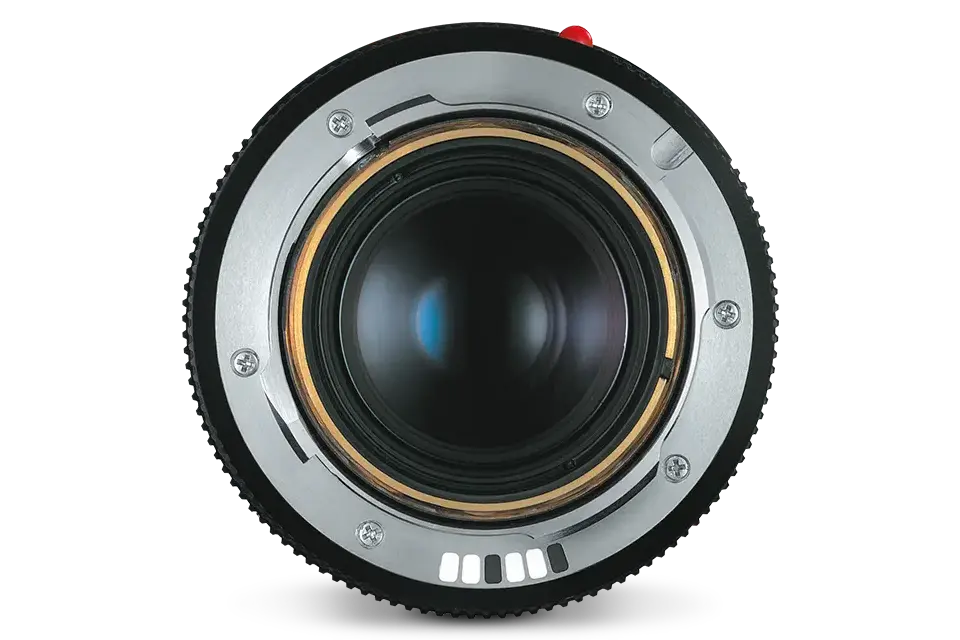
6-bit coding was introduced by Leica in 2006 with the launch of the Leica M8, the brand’s first digital rangefinder camera. It’s based on a binary code composed of six black and white zones, located on the lens bayonet ring. This code, ranging from 0 to 63, is read by an optical sensor inside the camera. It automatically identifies the lens in use, without manual intervention in the menus.
In addition, this system makes it possible to integrate lens information into image EXIF metadata, facilitating image management and post-processing.
The data transmitted is also used to apply appropriate optical corrections (vignetting, color shifts, etc.), notably on JPEG files, as well as during RAW file development.
Where is the code on the lens?
The 6-bit code is located on the bayonet ring. It takes the form of six small areas, painted black or left white, arranged in a line.
How does the camera read the information?
An optical sensor built into the housing analyzes this pattern when the lens is mounted. Your Leica camera reads it automatically, without any action on the part of the user.
What is the purpose of 6-bit coding on a digital camera?
6-bit coding brings a number of practical benefits:
- Automatic identification of the mounted lens
- Application of optical corrections (vignetting, color drift)
- Recording of information in EXIF metadata
Can 6-bit coding be added to uncoded M optics?
Yes, it is possible to add 6-bit coding to older Leica M lenses, originally designed for film.
This operation involves applying a specific marking to the bayonet, using the code corresponding to the lens model. Once coded, the lens is recognized by compatible digital cameras, which can then optimize image rendering.
This allows you to retain the characteristics of older lenses, while benefiting from the advantages offered by more recent digital cameras.
Leica offers a list of code correspondences, ensuring compatibility with many M system lenses. This approach is in line with the Leica M system’s long-term vision.
For example, code 100100 corresponds to a specific model, the Leica 75mm f/2 APO-Summicron-M ASPH.
Leica lens code list
Leica offers a list of codes for adding 6-bit coding to older lenses, to ensure compatibility with recent digital cameras.
List of Leica M lenses compatible with 6-bit encoding for digital use
This list enables you to identify the code corresponding to your lens in order to add 6-bit coding to a non-coded lens. In this way, you can adapt an old Leica M lens and make it fully recognized by a digital camera.
Tips: In the code, 0 corresponds to a white cell and 1 to a black cell.
| Lens Name | Black | Chrome | Code |
| Tri-Elmar-M 16-18-21mm f/4 ASPH | 11626 | – | 010000 |
| Super-Elmar-M 18mm f/3.8 ASPH | 11649 | – | 110100 |
| Super-Elmar-M 21mm f/3.4 | 11145 | – | 110011 |
| Elmarit-M 21mm f/2.8 | 11134 | – | 000001 |
| Elmarit-M 21mm f/2.8 ASPH | 11135 | 11897 | 011000 |
| Summilux-M 21mm f/1.4 ASPH | 11647 | – | 101111 |
| Elmar-M 24mm f/3.8 ASPH | 11648 | – | 110010 |
| Elmarit-M 24mm f/2.8 ASPH | 11878 | 11898 | 011001 |
| Summilux-M 24mm f/1.4 ASPH | 11601 | – | 110000 |
| Tri-Elmar-M 28-35-50mm f/4 ASPH | 11890 | 11894 | 101010 |
| Elmarit-M 28mm f/2.8 (III) | 11804 | – | 000011 |
| Elmarit-M 28mm f/2.8 (IV) | 11809 | – | 011011 |
| Elmarit-M 28mm f/2.8 ASPH | 11606 | – | 011100 |
| Summicron-M 28mm f/2 ASPH | 11604 | – | 011010 |
| Summarit-M 35mm f/2.5 | 11643 | – | 101011 |
| Summicron-M 35mm f/2 (IV) | 11310 | 11311 | 000110 |
| Summicron-M 35mm f/2 ASPH | 11879 | 11882 | 011110 |
| Summilux-M 35mm f/1.4 ASPH | 11874 | 11883 | 011101 |
| Elmar-M 50mm f/2.8 | 11831 | 11823 | 100010 |
| Summarit-M 50mm f/2.5 | 11644 | – | 101100 |
| Summicron-M 50mm f/2 (III) | 11817 | – | 010111 |
| Summicron-M 50mm f/2 (IV, V) | 11819 | 11825 | 100001 |
| APO-Summicron-M 50mm f/2 (VI) | 11141 | – | 101001 |
| Summilux-M 50mm f/1.4 (II) | 11868 | 11856 | 000101 |
| Summilux-M 50mm f/1.4 ASPH | 11891 | 11892 | 100000 |
| Noctilux-M 50mm f/1 | 11821 | – | 011111 |
| Noctilux-M 50mm f/0.95 ASPH | 11602 | – | 110001 |
| Summarit-M 75mm f/2.5 | 11645 | – | 101101 |
| APO-Summicron-M 75mm f/2 ASPH | 11637 | – | 100100 |
| Summilux-M 75mm f/1.4 | 11810 | – | 100011 |
| Macro-Elmar-M 90mm f/4 | 11633 | 11634 | 100111 |
| Macro-Adapter-M | 14409 | – | 101000 |
| Tele-Elmarit-M 90mm f/2.8 | 11800 | – | 000100 |
| Elmarit-M 90mm f/2.8 | 11807 | 11808 | 100110 |
| Summarit-M 90mm f/2.5 | 11646 | – | 101110 |
| Summicron-M 90mm f/2 | 11136 | 11137 | 000111 |
| APO-Summicron-M 90mm f/2 ASPH | 11884 | 11885 | 100101 |
| Elmarit-M 135mm f/2.8 | 11829 | – | 001001 |
| APO-Telyt-M 135mm f/3.4 | 11889 | – | 110101 |
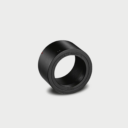
Tool for coding an old Leica M lens
Dedicated tools enable you to add or reproduce the 6-bit marking on the bayonet of non-coded Leica lenses. They facilitate precise application of the pattern and guarantee reliable reading by the housing.